Learn how to calculate the distance a car travels with uniform acceleration. Find the distance covered in 10 seconds.

Featured Articles on: PHYSICS
Learn how to calculate the distance a car travels with uniform acceleration. Find the distance covered in 10 seconds.
Learn about momentum in physics with 10 examples from basic to advanced. Explore how momentum affects objects in motion.

Learn how to calculate mass using different methods from converting grams to kilograms to finding mass from weight or density. Essential examples included.

Learn how Newton’s Law of Gravitation describes the force of attraction between masses. This example calculation demonstrates the formula in action.
Learn how to solve projectile motion problems using quadratic equations. Find the maximum height and time of flight for a projectile launched at a 45-degree angle.

Learn how to add two vectors and find the magnitude and angle of the resultant vector. This guide provides a step-by-step explanation.
Proba-3 a cutting-edge Sun-observing satellite successfully launched from Sriharikota. The mission aims to advance space weather research.

Discover the difference between displacement and distance and how to calculate both, using a simple example of a cyclist’s journey.

Explore the concept of a Frame of Reference in Physics and how it’s used to understand the position and motion of objects.
Conquer the CBSE Board Exams 2025 with our guide! Learn effective study strategies, time management tips, and overcome exam anxiety for success.

In the realm of physics, motion plays a pivotal role in understanding how objects behave in our universe. Among the various types of motion, linear and circular motion are fundamental concepts that provide insights into how objects move in a straight line or around a...
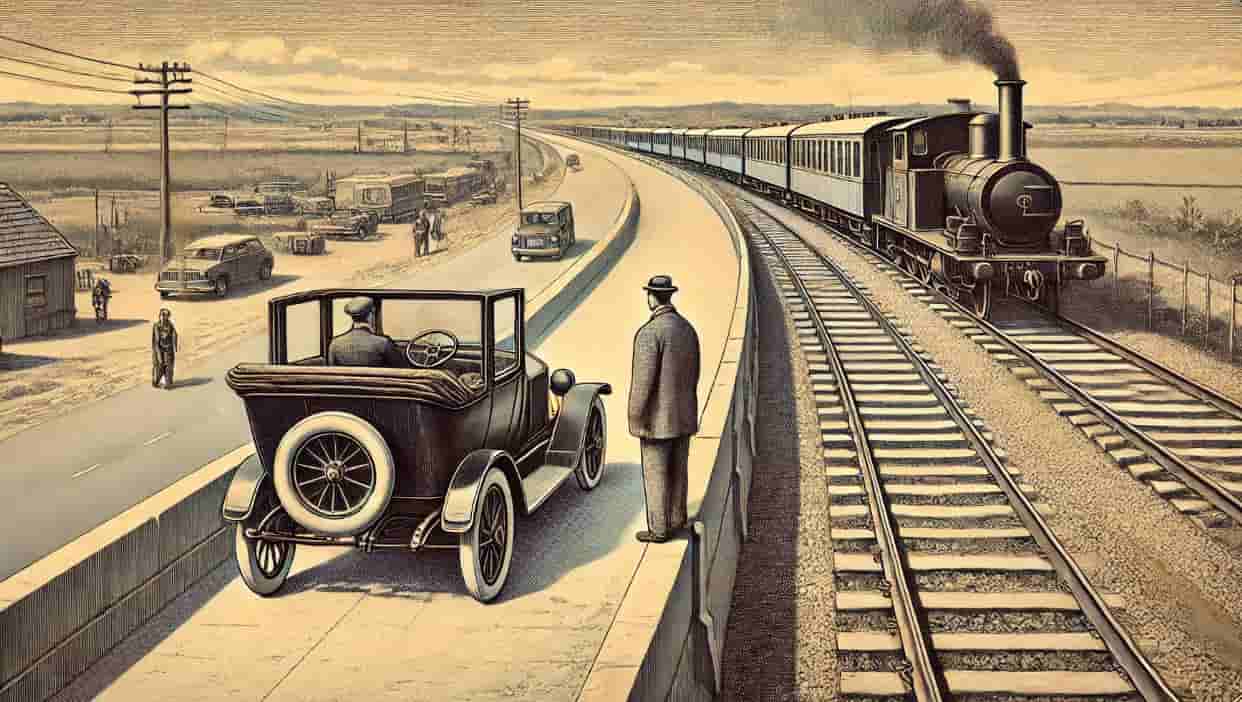
A swimmer is crossing a river that flows at 2 m/s. The swimmer’s speed relative to the water is 4 m/s.
Determine the swimmer’s speed relative to the riverbank (absolute motion) when swimming directly downstream.
Determine the swimmer’s speed relative to the riverbank w…
A boat is moving downstream on a river. The river flows at a speed of 3 m/s relative to the riverbank. The boat’s engine propels it at a speed of 7 m/s relative to the water.
Determine the speed of the boat relative to the riverbank (absolute motion).
If the boat turns…

Understanding the concepts of Relative and Absolute Motion forms a crucial part of mastering the principles of kinematics. When we delve into the complex worlds of physics, these two notions significantly influence how we perceive and analyse movement. In essence,...

Motion in One Dimension forms the foundational block in understanding the Physics of movement. This topic delves into the specifics of how objects move in a straight line under the influence of various forces. By exploring the key concepts of displacement, velocity,...
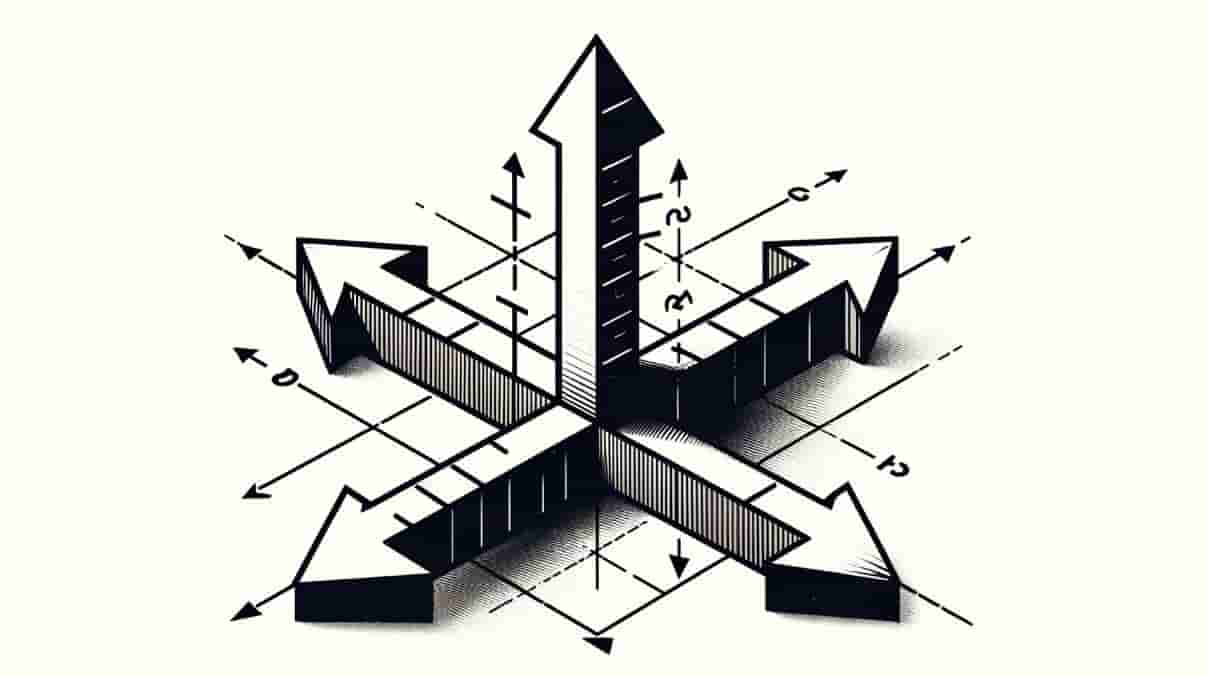
In physics and geometry, the concept of "three dimensions" refers to a spatial framework necessary to describe the position or location of an object fully. Each dimension provides a unique axis that, together with the others, can describe any point in space. Here’s a...