ASTRONOMY
Resources & Insights
Explore the universe with astronomy—the study of celestial objects, space, and the cosmos. Learn about stars, planets, galaxies, black holes, and the origin of the universe. Discover space missions, telescopes, and astronomical phenomena. Perfect for students, enthusiasts, and anyone fascinated by the wonders of the night sky
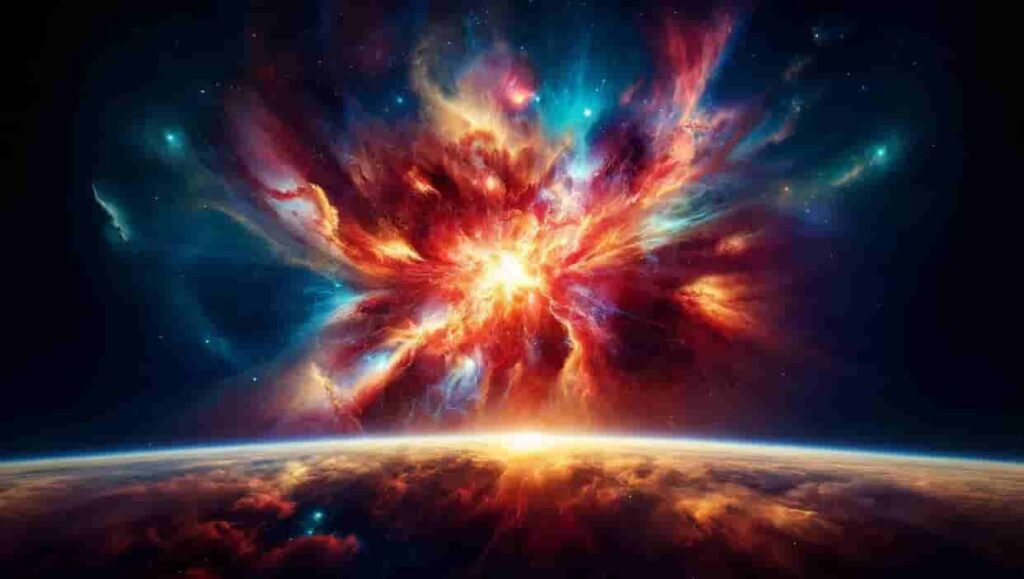
The Pivotal Role of Supernova Explosions in Shaping Our Universe
Supernova Explosions: A Cosmic Transformation The study of supernova explosions has significantly expanded our understanding of the intricate workings of the universe. These cataclysmic events have provided invaluable insights into the life cycles of stars, the formation of essential elements, and the accelerating expansion of the cosmos. Seeding the Cosmos with Stardust The remnants of supernova explosions, rich in heavy elements, disperse into the vast reaches of space, seeding future generations of stars and planets. In fact, a substantial portion of the material that composes the Earth and our own bodies was forged in the heart of these stellar giants and scattered throughout the universe by supernova events. This cyclical process of stellar birth, death, and rebirth is a fundamental […] READ MORE...
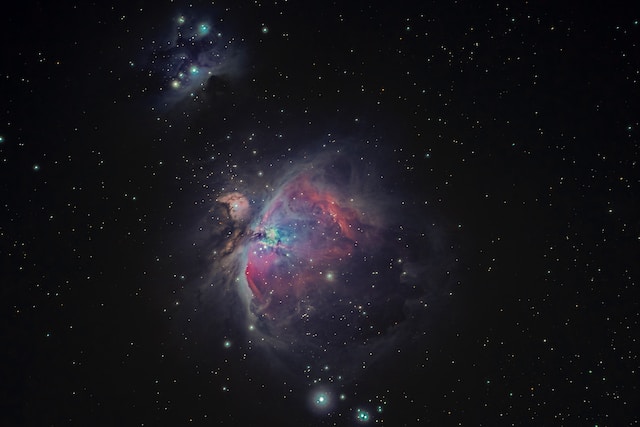
Exploring the Cosmos: Astronomy and the Wonders of the Universe
As we stand on this tiny planet, gazing up at the cosmos, we are reminded of our profound connection to the universe READ MORE...
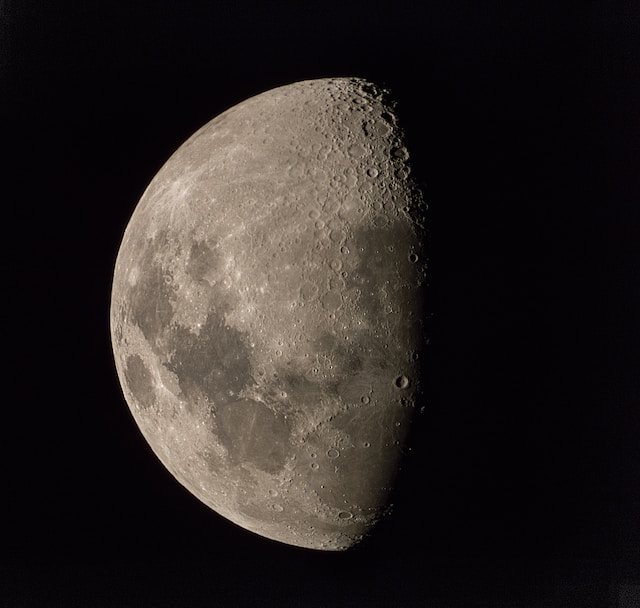
Chandrayaan-3: India's Lunar Exploration Mission to Discover the Moon's Composition
In 2008, India embarked on its first lunar exploration mission, Chandrayaan-1, marking a significant milestone in its space endeavors. Following the success of Chandrayaan-1 and the failure of Chandrayaan-2, India announced its plans for Chandrayaan-3, the country's third lunar exploration mission. Chandrayaan-3 is designed with multiple objectives in mind. Primarily, it aims to achieve a soft landing on the moon's surface and conduct in-situ studies of its composition. The mission intends to analyze the lunar surface's topography, mineralogy, and elemental abundance, providing valuable insights into the moon's geological history and evolution. Furthermore, the mission will examine the lunar exosphere, which comprises the moon's thin outermost atmospheric layer, shedding light on the lunar environment and its interactions with the solar wind. […] READ MORE...
Discovering Near-Earth Objects
The 1781 discovery of Uranus approximately where the Titius-Bode law had forecast seemed a confirmation of its accuracy; Ceres, too, was in the right place. Piazzi first thought it might be a comet, but other astronomers doubted that. After the 1802 discovery of Pallas, traveling in a similar orbit, William Herschel declared the two objects to be a new class of celestial bodies: asteroids. READ MORE...
NASA 2022 Year Review
An Astronomical and Historic 2022 – What We Did This Year @ NASA – December 23, 2022 https://youtu.be/Z5cayPF5qeQ READ MORE...