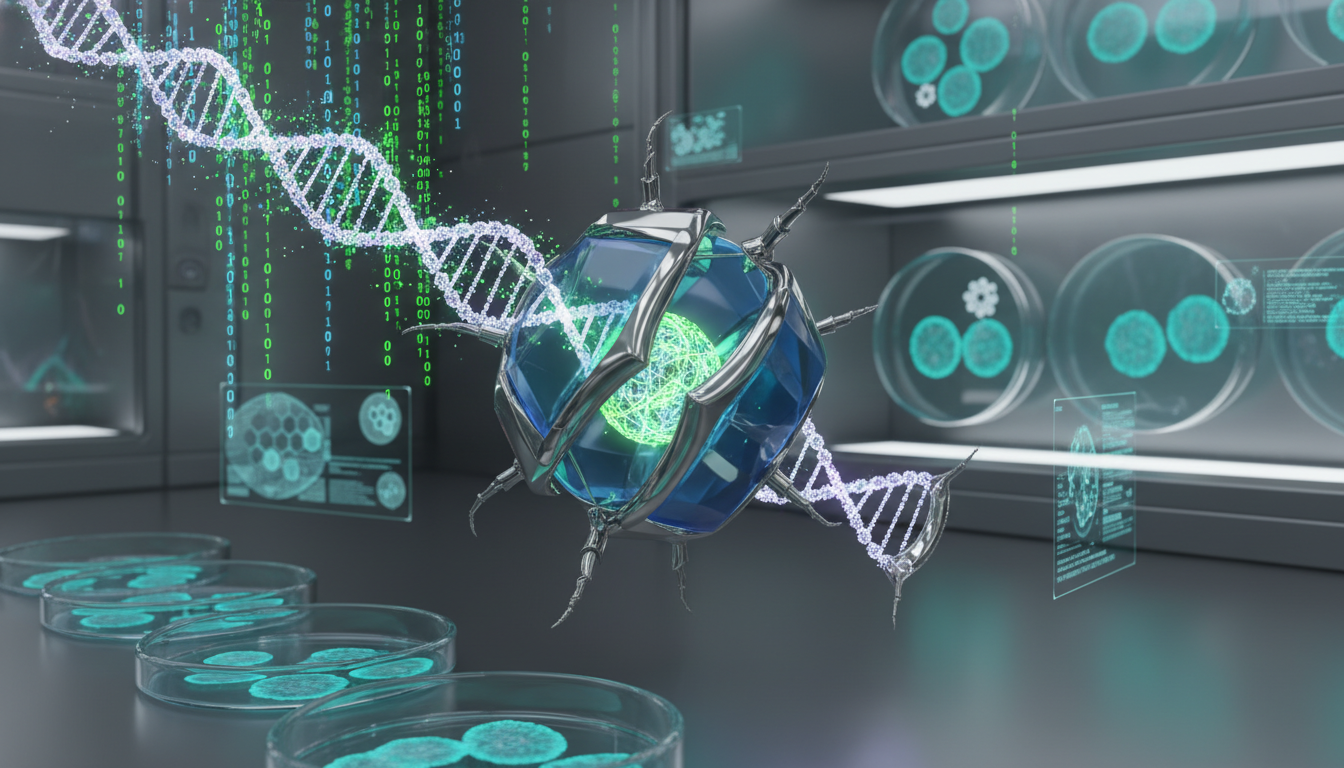
The field of synthetic biology has transitioned from a descriptive science to a generative one, mirroring the evolution of computer science from simple data processing to complex neural architectures. In early December 2025, a landmark achievement was recorded in the laboratory setting: the first working genome entirely designed by an artificial intelligence model—a synthetic bacteriophage—was successfully tested and validated. This milestone does more than just prove a technical concept; it signals the start of an era where biological code can be written with the same precision and iterative speed as software. The intersection of generative AI and genomic engineering has long been anticipated. However, the complexity of a whole genome, even for a relatively simple organism like a virus, presents immense challenges. Unlike protein design, where a single sequence folds into a discrete structure, a genome is a complex ecosystem of overlapping genes, regulatory elements, and structural motifs that must cooperate in a temporal sequence. The successful deployment of AI-generated genomes indicates that our computational models have finally captured the latent grammar of life at the systemic level.
Architectural Foundations of the Evo Models
The breakthrough in synthetic viral design was powered by advanced genome language models, specifically the Evo 1 and Evo 2 architectures developed by researchers at Stanford University and the Arc Institute. These models are built upon the Transformer architecture, which was originally designed for natural language processing but has proven remarkably effective at capturing the long-range dependencies inherent in DNA sequences.
The DNA alphabet, consisting of the four nucleotides adenine (A), cytosine (C), guanine (G), and thymine (T), can be viewed as a biological language. In this framework, codons represent words, and genes represent sentences. However, the true complexity lies in the global context—the "paragraphs" and "chapters"—where structural and regulatory interactions occur across thousands of base pairs.
To train these models, researchers utilized billions of parameters and trillions of tokens derived from existing genomic databases. The objective function of the model involves predicting the next nucleotide in a sequence, represented mathematically as:
###P(x_i | x_{i-k}, \dots, x_{i-1}) = \frac{\exp(e(x_i) \cdot h_{i-1})}{\sum_{j \in \{A,C,G,T\}} \exp(e(x_j) \cdot h_{i-1})}###
where ##e(x_i)## is the embedding of the ##i##-th nucleotide and ##h_{i-1}## is the hidden state vector representing the previous context window. By optimizing this probability over vast genomic datasets, the AI learns the underlying constraints that distinguish a functional genome from a random sequence of nucleotides.
The Bacteriophage as a Biological Platform
Bacteriophages, or phages, were selected as the primary target for this synthetic endeavor due to their relatively small genomes and their critical role in the fight against antibiotic resistance. The specific template used was the ΦX174 (Phi X 174) phage, which holds historical significance as the first DNA-based genome to be sequenced, back in 1977.
ΦX174 is a single-stranded DNA virus that infects *Escherichia coli*. Its genome is extremely compact, consisting of approximately 5,386 nucleotides and 11 genes. Many of these genes are overlapping, meaning the same sequence of DNA encodes multiple proteins through the use of different reading frames. This biological compression represents a high-dimensional optimization problem that is difficult for human engineers to solve manually, but which generative AI models are uniquely suited to handle.
The AI-designed variants were not mere copies of the natural ΦX174. Instead, the models generated over 300 candidate genomes, many of which exhibited significant evolutionary novelty. In lab trials, 16 of these candidates were found to be fully functional, capable of infecting hosts and replicating successfully. Some variants shared as little as 63% amino acid identity with known natural proteins, effectively creating entirely new "species" of bacteria killers in silico.
Mathematical Modeling of Phage-Host Kinetics
To quantify the efficacy of these synthetic virus killers, researchers employ mathematical models of population dynamics. The interaction between a bacteriophage population (##P##) and a susceptible bacterial population (##B##) can be described using a system of non-linear ordinary differential equations (ODEs), often derived from the Lotka-Volterra framework:
###\frac{dB}{dt} = \mu B \left(1 - \frac{B}{K}\right) - k B P###
###\frac{dP}{dt} = \beta k B(t - L) P(t - L) - k B P - m P###
In these equations:
* ##\mu## represents the maximum specific growth rate of the bacteria.
* ##K## is the carrying capacity of the environment.
* ##k## is the adsorption rate constant, representing the probability of a phage successfully binding to a host cell.
* ##\beta## is the burst size, or the number of new phages released per lysed cell.
* ##L## is the latent period, the time delay between infection and lysis.
* ##m## is the natural decay rate of the phages.
The AI-generated genomes were specifically optimized to maximize the adsorption rate ##k## and the burst size ##\beta##, while minimizing the latent period ##L##. In the December 2025 laboratory tests, the synthetic phages demonstrated a significantly higher "kill rate" compared to the wild-type ΦX174, effectively suppressing *E. coli* populations at a faster rate than traditional antibiotic treatments.
Overcoming the Crisis of Antibiotic Resistance
The primary motivation for designing AI-generated genomes is the escalating threat of antimicrobial resistance (AMR). Conventional antibiotics act as broad-spectrum biochemical agents, often killing beneficial microbiota alongside pathogens and driving the evolution of resistant "superbugs." Phage therapy offers a surgical alternative: phages are highly host-specific, targeting only the pathogenic strain.
However, bacteria also evolve resistance to phages through mechanisms such as CRISPR-Cas systems or receptor mutations. The breakthrough in synthetic biology allows scientists to "prompt" an AI to design a biological solution tailored to a specific resistant threat. If a bacterial strain evolves a mutation in its surface proteins to avoid infection, the AI can rapidly generate a new phage genome with a modified binding domain.
During the testing phase, the researchers created a "phage cocktail"—a mixture of diverse AI-designed genomes. This cocktail was tested against three different *E. coli* strains that were completely resistant to the natural ΦX174 phage. Within just a few passages, the AI-designed variants were able to overcome the bacterial resistance through rapid recombination and mutation, a feat that natural phages could not achieve within the same timeframe.
The Pipeline: From In Silico Design to In Vitro Reality
The process of creating a synthetic virus killer involves three distinct stages: design, synthesis, and validation.
In the design phase, the Evo models generate a digital representation of the genome. This digital code is then filtered through a series of computational checkpoints to ensure the presence of essential genetic elements, such as the origin of replication and lysis genes.
The synthesis phase relies on advanced DNA printing technologies. Using high-throughput phosphoramidite synthesis or enzymatic DNA assembly, the digital sequence is converted into a physical DNA molecule. For a genome the size of ΦX174, this involves assembling multiple 500-1000 base pair fragments into a circular plasmid.
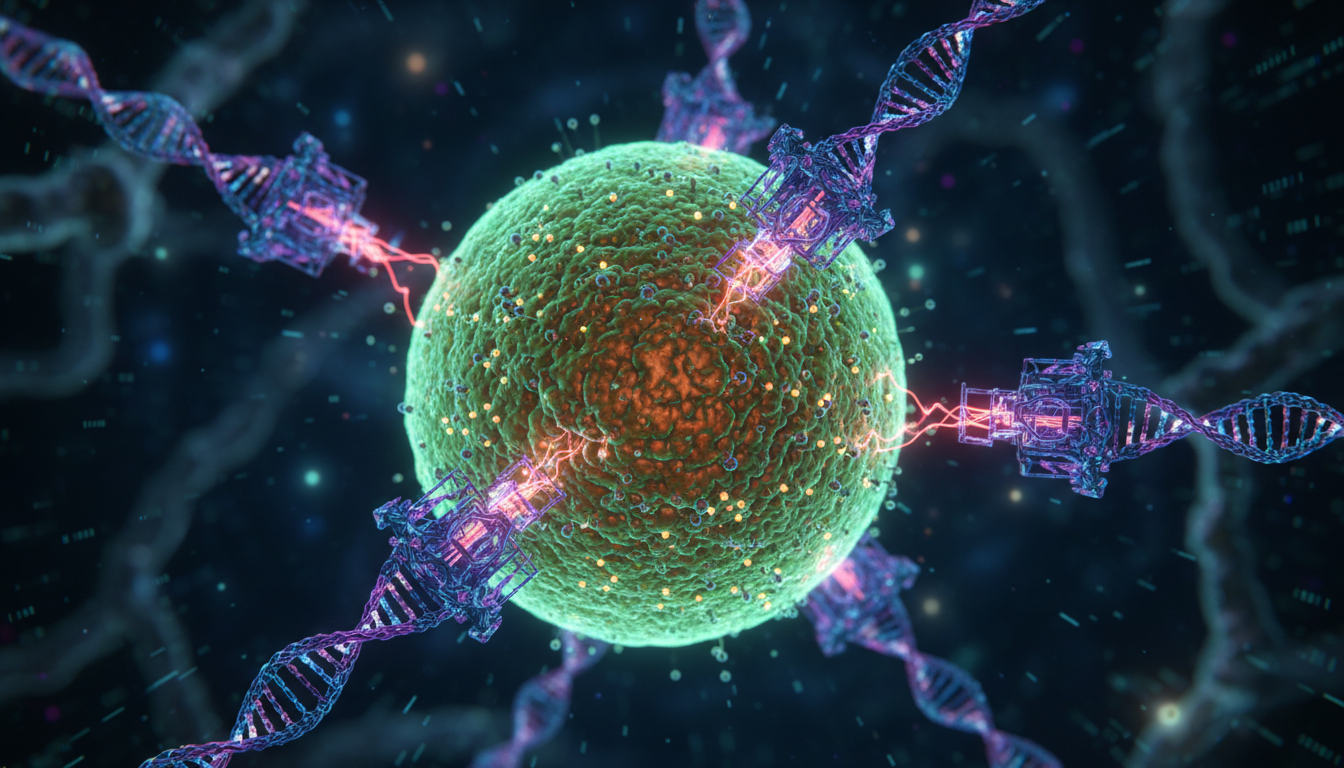
In the validation phase, the synthetic DNA is "booted up." This is typically done through a process called transformation or electroporation, where the synthetic genome is inserted into a host bacterial cell. If the AI design is functional, the cell's machinery will transcribe and translate the synthetic code, producing new viral particles that eventually lyse the cell and begin the infection cycle in a culture dish.
Statistical Analysis and Information Theory in Genome Design
Designing a functional genome is essentially an exercise in managing biological information. The complexity of a genome can be analyzed using Shannon entropy, which measures the uncertainty or information content in a sequence. For a DNA sequence ##X##, the entropy ##H(X)## is calculated as:
###H(X) = -\sum_{i=1}^{n} p(x_i) \log_2 p(x_i)###
where ##p(x_i)## is the probability of occurrence of each nucleotide. In natural genomes, entropy is not uniform; regulatory regions and highly conserved genes show lower entropy due to functional constraints. AI models learn to replicate this informational signature, ensuring that the generated sequences possess the correct balance of conservation and variation.
Furthermore, the researchers utilized Bayesian inference to refine the AI's outputs. By treating the functional success of a genome as a posterior probability, the models can be fine-tuned based on experimental results. This iterative feedback loop—the "Design-Build-Test-Learn" cycle—is what allowed the December 2025 tests to move from theoretical models to viable pathogens in such a short period.
Biosecurity and the Policy Framework of 2026
While the creation of AI-generated genomes offers a powerful tool for healing, it simultaneously introduces unprecedented risks. The ability to write the code of life from a computer terminal means that, in theory, harmful pathogens could be designed with the same ease as therapeutic phages.
Current biosecurity screening relies on sequence homology—checking if a requested DNA sequence matches a known "list" of regulated pathogens. However, AI can design functional viruses that look nothing like known sequences, rendering traditional screening obsolete. If an AI generates a novel toxin or a virus with a 50% sequence difference from any known threat, it might bypass existing filters.
In response to this, the global scientific community is calling for the establishment of "Biosecurity for AI" frameworks. Expected to be codified in 2026, these regulations will likely shift from sequence-based screening to function-based screening. This involves using predictive AI models to evaluate whether a synthetic sequence encodes hazardous biological functions, regardless of its similarity to known organisms. Additionally, "red-teaming" for biological models will become a standard practice, where security experts attempt to coax models into designing harmful agents to identify and patch vulnerabilities.
Computational Challenges in Scaling Genome Design
Despite the success with ΦX174, scaling this technology to larger genomes—such as those of bacteria or even eukaryotic cells—remains a significant hurdle. The human genome is over half a million times larger than that of a simple phage, containing billions of base pairs and intricate epigenetic regulation.
The computational cost of processing such large sequences grows quadratically with the sequence length in standard Transformer models, due to the self-attention mechanism. Specifically, the complexity of the attention operation is:
###O(N^2 \cdot d)###
where ##N## is the sequence length and ##d## is the embedding dimension. To design larger AI-generated genomes, researchers are exploring linear-complexity attention mechanisms or hierarchical models that process DNA at multiple scales (e.g., k-mers, genes, then whole chromosomes).
Another challenge is the "biological dark matter"—the vast portions of genomes whose functions are still unknown. For AI to design truly complex life, it must not only replicate existing patterns but also understand the functional implications of non-coding regions and long-range chromatin interactions.
Conclusion: The Programmable Future of Biology
The successful testing of AI-generated genomes in late 2025 marks a turning point in human history. We are moving away from a world where we must hunt for cures in the natural environment and toward a world where we can compute them. The ability to design synthetic bacteriophages that outperform their natural counterparts provides a critical weapon in the ongoing war against antibiotic-resistant bacteria.
However, the "bacteria killers" of today are just the beginning. The methodologies established by the Evo models and the validation frameworks developed for ΦX174 lay the groundwork for the generative design of more complex biological systems. In the coming years, we may see AI-designed microbes that can degrade plastic in the oceans, capture carbon from the atmosphere more efficiently, or serve as programmable drug delivery vehicles within the human body.
As we step into 2026, the focus will shift from the laboratory to the legislature. Establishing robust biosecurity guardrails is essential to ensure that the power to write the code of life is used responsibly. If we can navigate these ethical and security challenges, the era of programmable biology promises to be as transformative as the digital revolution that preceded it.
From our network :
- https://www.themagpost.com/post/trump-political-strategy-how-geopolitical-stunts-serve-as-media-diversions
- AI-Powered 'Precision Diagnostic' Replaces Standard GRE Score Reports
- 10 Physics Numerical Problems with Solutions for IIT JEE
- Mastering DB2 LUW v12 Tables: A Comprehensive Technical Guide
- 98% of Global MBA Programs Now Prefer GRE Over GMAT Focus Edition
- Vite 6/7 'Cold Start' Regression in Massive Module Graphs
- EV 2.0: The Solid-State Battery Breakthrough and Global Factory Expansion
- https://www.themagpost.com/post/analyzing-trump-deportation-numbers-insights-into-the-2026-immigration-crackdown
- Mastering DB2 12.1 Instance Design: A Technical Deep Dive into Modern Database Architecture
RESOURCES
- 2025 Synthetic Biology Conference GRC
- 2025 Synthetic Biology: Engineering, Evolution, & Design (SEED ...
- Synthetic Biology UK 2025
- 2025 Central US Synthetic Biology Workshop | BioTechnology Institute
- 2025 Plant Synthetic Biology Symposium
- 2025 International Mammalian Synthetic Biology Workshop (mSBW ...
- Synthetic biology - Latest research and news | Nature
- iGEM
- Synthetic Biology in Natural Product Biosynthesis
- iGEM 2025 highlights: The future of synthetic biology
- ACS Synthetic Biology Journal - ACS Publications
- Closing the Biosecurity Gap in Synthetic Biology
- Meet John Ngo, Winner of the 2025 ACS Synthetic Biology Young ...
- iGEM Competition
- S.2695 - 119th Congress (2025-2026): Synthetic Biology ...

1 Comment